

Go Back Go Back Go Back Go Back Go Back Go Back Go Back Go Back Go Back Go Back Go Back Go Back Go Back Go Back

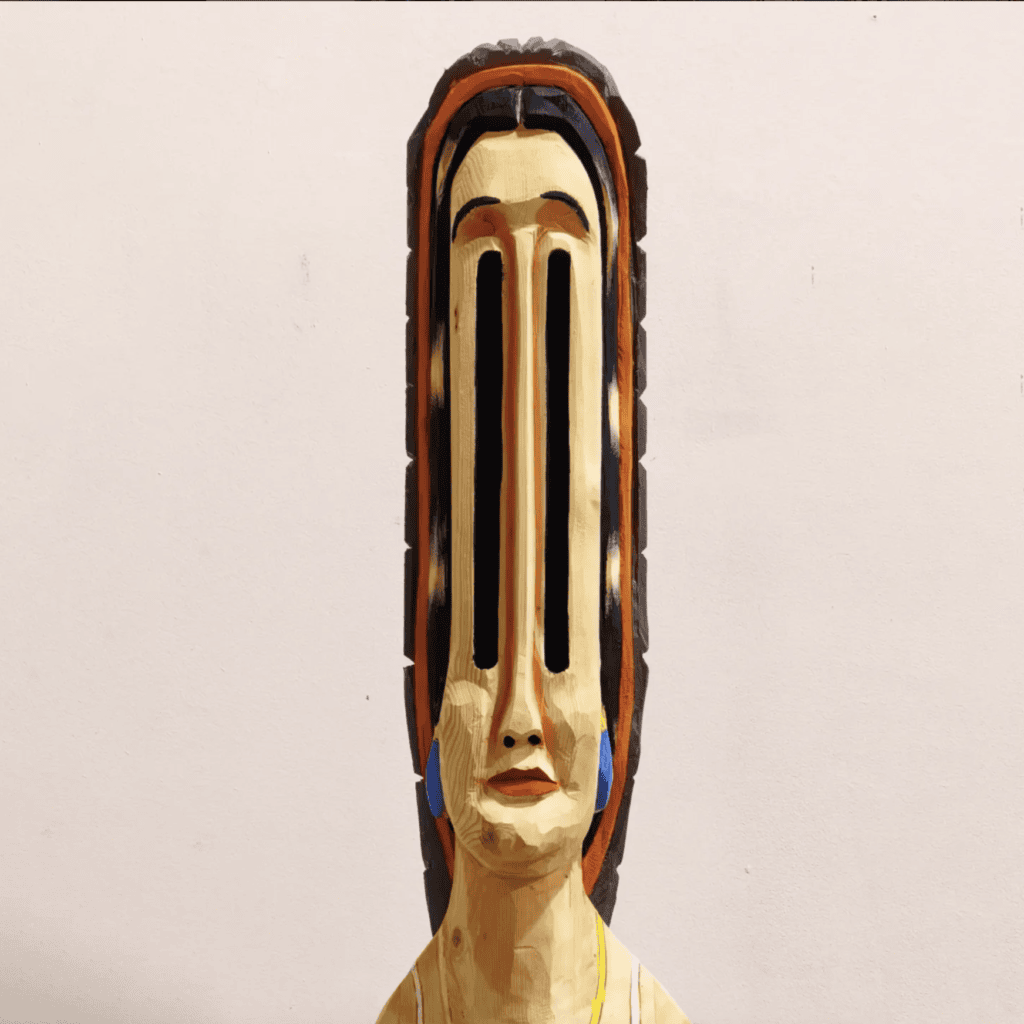
ARTIST: Gloria Maria Cappelletti ARTIST: Gloria Maria Cappelletti ARTIST: Gloria Maria Cappelletti ARTIST: Gloria Maria Cappelletti ARTIST: Gloria Maria Cappelletti ARTIST: Gloria Maria Cappelletti
Markos Kay
Visual Alchemist Visual Alchemist Visual Alchemist Visual Alchemist Visual Alchemist Visual Alchemist

Born and raised in Cyprus, my interest in art & science started at a very early age, perhaps from a need to understand how things work on a fundamental level and the need to express that wonder. I spent the majority of my childhood drawing, making, and reading science or art encyclopaedias, before the internet. I had a huge fascination with baroque artists, surrealism, Hieronymous Bosch and black holes! In my teens I had a very traditional art training with the aim to study fine art but in my spare time I started increasingly experimenting with digital media on the computer.
My interest in digital tools led me to London in 2003 to study Communication Design and later to a Masters degree specialising in Digital Media at Central St. Martins. Because of my background in both art and design, my work now often lies on the intersections of the two. I have been working with scientific subjects combined with generative art methods since 2005. I see the recent advancements in AI art as a natural evolution of generative art which can be traced back to the 60s. My first digital moving image works that I created focused around themes of AI and it’s interesting to see this subject come to the forefront again today and in my own practice.
People often think of science as the antithesis of art but I see them as intimately intertwined in collective culture, informing and shaping each other throughout history. The scientific method itself can be seen as a creative process — it deconstructs and reconstructs knowledge and uncovers beauty, complexity, and simplicity, just like art does. The desire of artists to find ways to understand, represent and reinterpret the world gives rise to an investigation of nature, perception and thought — which is exactly what a scientist does. Science is able to profoundly change the way we think, to create new connections and paradigm shifts. It is exactly those profound cognitive shifts, similar to the effect that art has on our minds, that are the source of endless inspiration.
I have been closely following developments in AI image generation since Google released Deep Dream, and it’s amazing to see how this technology has advanced in less than a decade. I believe its impact will be huge. It will change the way we approach many disciplines and I think it will also provide a new paradigm in the way we approach knowledge and science. I see AI permeating every aspect of digital creation and changing the way we interact with computers in general. Its biggest impact will probably be in VR and gaming as it will be able to create highly immersive worlds. It is important to note that AI is only a tool, and therefore it is a method of expression just like any other artistic tool. This tool is opening up new possibilities and forms of creativity for artists, it’s up to us to use it in original and inventive ways!
I was quite surprised to see negative reactions to AI coming from digital creatives that should be accustomed to technologies changing all the time. This is clearly the natural evolution of digital tools and it also opens up new unexplored paths which is very exciting. Some creatives feel like it’s a threat because now anyone can be an artist. But one could say the same thing about photography, yet professional photographers still remain and good photography is very difficult regardless of how easy it is to take a picture!
Some people believe that the output of AI is not original but merely derivative. However these outputs are directed by us and our unique combination of references, viewpoints and experiences, which bring a human element to the equation. Even if AI could create its own art without human direction does that make it any less valuable? What about abstract expressionism, gestural abstraction, automatism and generative art? These types of art are about relinquishing control and letting the art create itself in one way or another. But still, the act of creation is there. The tool becomes the artform, the intention and expression is the art.
AI art is giving artists the chance to find new creative pathways and to express themselves in ways that weren’t possible before because there was not enough time or means or just would be unthinkable. When I first started using the AI tool it felt like I had a team of 30 people working for me on the clock, but actually it cannot be compared to what humans do, it’s its own unique thing with its own language and specific context.
The speed of creation, however, is quite extraordinary, I have been able to visualise projects that I thought would never see the light of day in a matter of days. As someone with a serious disability, this has been nothing short of a miracle as it has given me the ability to create and express myself again which I felt I had lost because of my illness. This technology is making art accessible to millions of people that weren’t able to express themselves before for whatever reason, which is very exciting to see.
Working closely with AI has been a very reflective and introspective process for me. I think there are a lot of things it can reveal about ourselves and the nature of our reality. As human organisms and brains, we could be compared to statistical models that have been trained with incoming data over thousands of years. In the same way, evolution could be thought of as a vast statistical model and thus one could argue that it is a form of intelligence.
We often think of intelligence as tied to consciousness, but AI is showing us that the definition of intelligence can be much more broad. It might even suggest that the consciousness that we hold on to so dearly might be an automated impersonal process regardless if it is computational or not. These ideas can threaten our sense of self and our special place in the universe which could be the reason why some people react negatively to AI technology.
There is something called the “AI effect” whereby every time an AI achieves something it is discounted as not real intelligence. People might be doing this subconsciously to retain their feeling of uniqueness, but as AI gets better at things we consider exclusively human, it becomes a reflection of the ways our biological systems may be automated. For me that is fascinating because through creating simulations of brain processes such as neural networks we get to learn more about our own brains. This ties in with my work from over the last 15 years or so, which has been an investigation on how simulations and visualisations have become the main tools of observation of real-world processes in contemporary science.
I think the question of sentience in AI is non-existent at this moment but also sentience might be overrated. Is it necessary for something to be sentient to have value or rights? We are now seeing rivers being given human rights in order to protect them, perhaps AI could be given similar rights in the future even if it is never truly sentient. The question that reflects back to us is, if our sentience or sense of subjectivity is just another automated process, does that make it any less real or any less important? Or on the flip side, perhaps that knowledge could free us from the constraints and limitations of subjective experience.
Markos Kay (née Markos Christodoulou) is a visual artist, creative director, illustrator and lecturer based in London, best known for his artificial life video art experiment “aDiatomea” (2007), a permanent exhibit at the Phyletic Museum in Jena, Germany. His 3D generative short “The Flow” (2011) has been shown internationally as part of “Resonance” a collaboration of over 30 independent visual artists and sound designers. MRK’s films have been exhibited worldwide, including OFFF Barcelona, Pause Fest Melbourne, Onedotzero London, Stroke Artfair Berlin and Viedram Rome.
Markos Kay Markos Kay Markos Kay Markos Kay Markos Kay Markos Kay
Gloria Maria Cappelletti Gloria Maria Cappelletti Gloria Maria Cappelletti Gloria Maria Cappelletti Gloria Maria Cappelletti Gloria Maria Cappelletti Gloria Maria Cappelletti


VISUAL ALCHEMIST


Disabled artist & director